Thursday, February 27, 2020

For my homologous set, I have chosen horses and alligators. Their shared homologous trait is their forelimbs. Horses are mammals, and  are typically farm animals or used for sports like horse racing or polo (just ask Ralph Lauren). Their legs are used for running and walking on land. Alligators, on the other hand, are reptiles, and typically resides in water environments such as the Everglades in Florida and use their legs for swimming more than for ambulating, though they do occasionally use them for that purpose.
A horse's forelimbs are longer and thinner (in comparison to the rest of their body), which is necessary for running and walking on land. An alligator's forelimbs are shorter and more compact than a horse's, and can be retracted to a degree while swimming, which is necessary to move through water more easily, while still allowing them to move on land, albeit more slowly.
Both animals share a common ancestor in the lobe-finned fish. Unlike other fish, the lobe-finned fish have lobe like, scaly stalk extending from the body, resembling an early version of what would eventually become legs. This support the claim of homology by showing the difference in each of the three, with the lobe-finned fish's "legs" being there even though the fish lived solely in water and did not use the fins for any walking purpose, but those fins would eventually become the legs of both the horse and the alligator, who use them not only for different purposes from each other, but for different purposes than their ancestor, the lobe-finned fish.

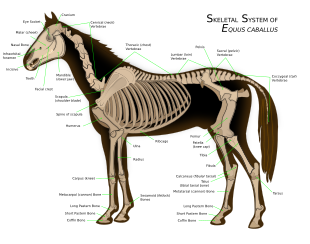
Image result for lobe-finned fish


Diagram of a horse skeleton with major parts labeled.Image result for alligato


The two species I've chosen for my analogous set are the duck and the platypus. A duck is a general name for a waterfowl and can include a number of species in the family Anatidae . Ducks reside in water, land, and the air, depending on whether they're swimming, walking, or flying. They have a feathered body, like most birds, which helps them with the flying. Ducks reproduce by laying eggs. Platypuses (yes, I googled the plural form of the word) reside mostly in the water, but occasionally they do come ashore to burrow, using their claws, in order to provide for safer breeding and nesting. Platypuses also reproduce by laying eggs, and this the the analogous trait they have in common (one of them, anyway).
I had initially thought of these two animals for my set because I assumed that their bills would be an analogous trait. Or at the very least, their webbed feet. I was wrong about both. Luckily, they do share one, as mentioned above, both the platypus and the duck reproduce by laying eggs. The eggs themselves, are similar in structure and shape, though the platypus eggs are  smaller in size, which seems almost counter-intuitive when you consider their size being almost the same as a duck. Both use the trait to reproduce. Both developed this trait as a function to reproduce due to their main residence being a water environment, and by laying eggs they did not need to leave their unborn young to the mercy of predators in the water where they could not properly supervise them due to the adult animal's inability to "sit still" while in the water.
The common ancestor to both the duck and the platypus could have possessed the common trait of egg laying, though it is not likely since most mammals do not lay eggs. Because their species are so entirely different in terms of their species, we can assume before even doing research that this trait is not genetically related from common descent. According to recent studies, the platypus' genetic code is an eclectic brew of bird, reptile and mammal. Research has also linked the evolution of a gene in the old platypus to a mutated version in humans responsible for moving the testes outside of the body and into an external pouch, or scrotum. The duck is evolved from waterfowl, which themselves evolved from avian dinosaurs, developing bills to adjust to their dietary needs in water environments.


 Image result for platypus and ducks analogiesImage result for platypus and ducks analogies


Thursday, February 13, 2020

In my opinion, Jean-Baptiste Lamarck had the greatest influence on Darwin’s theory of natural selection, in both a positive and negative way.

Lamarck was a botanist and zoologist and was one of the initial few to suggest that humans evolved
from a lower species, and that this was done by species adapting over time. Lamarck theorized that
adaptations occurred in simple life forms spontaneously, and would disappear if those adaptations were not used. His theories inspired Darwin to investigate on a positive level, as Darwin agreed with the overall theory, especially his explanations of vestigial structures, and in a negative way, as Darwin did not agree with Lamarck on how these changes occurred, disagreeing with the idea spontaneity being the way that the changes in species occurred. (https://evolution.berkeley.edu/evolibrary/article/history_09)

The points relating to Lamarck’s work in “How does evolution work” that most greatly affected Darwin’s work are “If the environment changes, the traits that are helpful or adaptive to that environment will be different”, “In order for traits to evolve and change, they must be heritable”, and Individuals do not evolve. Populations do.” As briefly mentioned above, Darwin worked on Lamarck’s existing theories but wanted to disprove part of the theory that he did not feel was correct, that adaptations occurred spontaneously. Darwin was able to disprove this through his theory of natural selection, which stated that the most successful organisms would be those whose traits adapted to their environment, due to their ability to obtain the resources they needed to reproduce and thrive, while those who were unable to do so would eventually cease to exist. Darwin also disproved Lamarck on the spontaneity theory by showing that those traits must be able to be passed on from generation to generation, although he was never able to completely explain how this occurred. Lastly, Darwin showed that since populations evolve, over great amounts of time, not over a single generation, that Lamarck’s theory of those changes spontaneously occurring was again incorrect for another reason as well.

While Darwin may still have developed his theory of natural selection without the influence of Lamarck’s work, it most likely would have taken much longer to arrive at his ultimate conclusions. The idea of evolution was already widely accepted in the scientific community at the time, and it is almost a certainty that Darwin was pursuing information in that area, but Lamarck’s theory was flawed in such a way that it was easy for Darwin to recognize and this led him to a much quicker path to natural selection (though the path itself was not quick by any stretch of the imagination).

Darwin, like most scientist of the time, was reticent to do anything that might cause himself harm from the church. The church had consistently taken action against anyone previously who had presented any scientific theory that was contrary to the religious tenants that the church espoused, and not wanting to risk those types of actions against himself (and because his wife was heavily involved in the church) Darwin ultimately chose not to publish his findings and they only came to light when, Alfred Russel Wallace, inspired him to actually publish “Origin of the Species” in 1859, 20+ years after his research, for fear that Wallace would get the credit for Darwin’s work after Wallace submitted some papers that reflected the same work Darwin had toiled over all those years prior.

Tuesday, February 4, 2020

If I were to be stranded on a desert island, the two items I would take with me are a fully charged satellite phone to call someone to rescue me, and also a book to read while I'm waiting to be rescued.