Tuesday, March 31, 2020

Human Variation & Race Blog


Heat stress can be dangerous and can have negative impacts on humans by raising their internal temperature too high which disrupts homeostasis. One example would be dehydration. Sweating is very beneficial for you, however while sweating you are losing water and electrolytes. So, if you sweat quite a bit without drinking enough water to replace what you are losing, you could become dehydrated, and depending on how badly it can become life threatening.

Humans have adapted to the stress of heat by evaporative cooling. Evaporative cooling is a short-term adaptation in which your body sweats and the perspiration evaporates from your skin, cooling your body down and returning your internal temperature back to homeostasis.
Ask Well: Is It Good to Sweat? - The New York Times

Vasodilation is a facultative adaptation where your blood vessels expand, allowing more blood to flow to the skin’s surface. The blood brings the warmth of your internal body temperature to the surface, allowing it to dissipate.
Thermoregulation | Temperature regulation strategies (article ...

A body shape best suited for hot climates would be slender, with long arms and legs which would be a developmental adaptation to heat stress according to Bergmann’s and Allen’s rule. This increased surface area relative to mass helps your body to get rid of some of its heat.
 How To Dress Well As A Tall & Slim Man | Style Tips For Skinny ...
An example of cultural adaptation to heat would be types of clothing you would wear. Light colored clothing, thinner material, shorts, and tank tops. All of this would help to keep your body cooler in a hot climate.

 Group Of Friends Together On The Beach Having Fun. Happy Young ...

This information can be used in a productive way by the way clothing is being made specifically to suit our needs in a hot climate. This is able to be done because of the studying and understanding of how our bodies react in such climates. So, we get to wear certain clothing based on what will help us to keep cool. 

The study of environmental influences on adaptations is a better way to understand human variation than by the use of race because race does not give you any information on human variation. Race is a social construct. Humans of different races can have the same traits, just as humans of the same race can be completely different. Depending on what climate you live in you will have certain traits that developed for you to be better able to adapt to that climate. 


Tuesday, March 24, 2020

Language Assignment Experiment


I found this experiment to be entertaining for half of the time and then tiring, and kind of frustrating for the rest of the 15 minutes. I had my husband help me for the first part of the assignment. He too, thought it was fun until he realized he really was not going to be able to understand everything I was gesturing. I told him I wanted to eat something, which he was able to get from my gestures. However, when I was trying to show him what I wanted it was really hard and I realized I would not be good in charades. He also started gesturing wildly at one point which made everything even harder and also a little funnier. He said he was not sure why he did that because it was not planned it just seemed like he should also gesture and that maybe it would make things easier. It did not.
I feel like for the most part he was in control of the conversation. My husband changed topics because he was trying to figure out a conversation where he would know what I was saying. He did a lot of asking questions. I think the person who is in control of the conversation was the one who was able to use language. Even though he did not understand everything I was saying, he did get some of it and it was helpful (aside from his gesturing) that he was able to voice his thoughts and ask questions about what I was talking about. He was also able to lead the conversation in different directions.
I think the culture that uses spoken language would have the advantage of communicating complex ideas with their population. Though, I do believe if we all just used gestures, we would understand each other if that was the only way to communicate. Maybe just not very complex ideas. I think the attitudes of the speaking culture would be that of frustration towards the culture that does not use symbolic language. It really was a little more than frustrating for my husband and I both to not be able to understand how to either gesture something or for him to understand what my movements meant. I would think the deaf culture resembles this. I know that it must be frustrating for them to not be understood especially when they know exactly what they are saying and what they mean, just as it might be frustrating for the person speaking to the deaf person to get them to understand something.
For part two of this experience I had my daughter help me. It was a little hard not to make any movement or change my voice in any way. I honestly thought that this part would have been easier. I never realized how often I use my hands or the amount of times I use facial expressions. My daughter said I was creeping her out. She did laugh a lot, but she kept saying “Stop, this is weird.” or “You’re acting like a robot!” It didn’t seem like she had any difficulty in understanding me. She said maybe if I was someone else, she would need certain gestures to go along with what they said so that she could understand how they may have meant something a little better.
Even though my daughter did not seem to have difficulty in understanding our conversation without any body movements, I do believe it is very important to have those cues in a conversation. The tone of their voice, or their facial expressions could help with meaning. I sometimes have to talk to my daughter about the way she says things. I will tell her that it isn’t what she said so much as how she said it. People can interpret things very differently than you meant them just by your gestures or tone. When you read a person’s body language you can a lot of times tell how they are feeling about what they are saying. Maybe they are jokingly saying something or perhaps they are angry. You can pick up on a lot of their moods and feelings and intent behind their words if you pay attention.
The adaptive benefit to be able to read body language is that we can understand something that someone says in one way and if they said it differently or added a gesture to it you would be able to understand in a completely different way. You would also know how to approach the situation based on tone of voice and body gestures. It could be a safety feature so to speak. In all these gestures you would know what a person may expect of you or what a person’s intent is.
I know that there are people who do not do well with reading body language. I also know I have read body language wrong before. I think if someone is in a rush, they may give off certain cues that they are annoyed or angry when they aren’t.

Tuesday, March 10, 2020


The Piltdown Hoax

1912 in Piltdown England Charles Dawson who was an amateur archeologist made a claim of finding a piece of a skull that looked primitive. He called for Arthur Smith Woodward who was England’s leading geologist and together they would find a jawbone that looked like an ape but with human teeth. There was doubt in the science community but that doubt was quieted when there was a tooth found that belonged to the jaw and skull and then another skull and it was said to be our earliest ancestor. Arthur Keith who was England’s leading anatomist believed in the findings which backed up his theory of evolution that big brains were developed before walking upright. In the end it was found to be a hoax that fooled many for 40 years.
The faults that came into play in this scenario was pride and self-interest. Making something up to make oneself look more prestigious and also to back up a theory of evolution. No one questioned scientist at that time and even if someone had any doubts did not want to question anyone with as much standing as Arthur Keith. Scientist or not, they were still humans who felt pressures of rivalry and egotism.
In 1949 the fossils were tested for the amount of fluorine present. It showed that the fossils were not as old as was thought, maybe only 100 thousand years old. In 1953 the fossils were looked at and examined more thoroughly and it was found that there was staining on the fossils that was superficial. It also showed that the fossils were cut using a steel knife. Looking at the teeth under the microscope it showed scratches looked to be made by a file. The jawbone was found to be that of a female orangutan and was dated less than 100 years old.
I do not believe it to be possible to remove the “human” factor from science unless you had some type of robot, but even then, there could be errors. I wouldn’t want to remove the human factor from science. There are so many precautions put in place now with having to prove your theories and other scientists trying to reprove or disprove your same theory, that I believe having a human factor is beneficial to science. Humans can contribute so much information. I truly don’t believe the science community would be so easily fooled again in this day and age.
A life lesson I think you could take away from this would be that you shouldn’t believe everything you hear or see without any evidence or without actually fact checking or looking for verified sources. Even if you really want to believe it to be true, make sure you research and really take a good look at any evidence presented.

Thursday, February 27, 2020

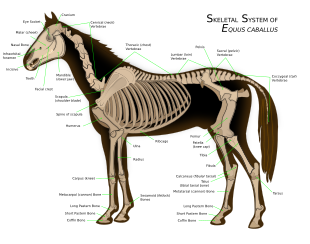
For my homologous set, I have chosen horses and alligators. Their shared homologous trait is their forelimbs. Horses are mammals, and  are typically farm animals or used for sports like horse racing or polo (just ask Ralph Lauren). Their legs are used for running and walking on land. Alligators, on the other hand, are reptiles, and typically resides in water environments such as the Everglades in Florida and use their legs for swimming more than for ambulating, though they do occasionally use them for that purpose.
A horse's forelimbs are longer and thinner (in comparison to the rest of their body), which is necessary for running and walking on land. An alligator's forelimbs are shorter and more compact than a horse's, and can be retracted to a degree while swimming, which is necessary to move through water more easily, while still allowing them to move on land, albeit more slowly.
Both animals share a common ancestor in the lobe-finned fish. Unlike other fish, the lobe-finned fish have lobe like, scaly stalk extending from the body, resembling an early version of what would eventually become legs. This support the claim of homology by showing the difference in each of the three, with the lobe-finned fish's "legs" being there even though the fish lived solely in water and did not use the fins for any walking purpose, but those fins would eventually become the legs of both the horse and the alligator, who use them not only for different purposes from each other, but for different purposes than their ancestor, the lobe-finned fish.

Image result for lobe-finned fish


Diagram of a horse skeleton with major parts labeled.Image result for alligato


The two species I've chosen for my analogous set are the duck and the platypus. A duck is a general name for a waterfowl and can include a number of species in the family Anatidae . Ducks reside in water, land, and the air, depending on whether they're swimming, walking, or flying. They have a feathered body, like most birds, which helps them with the flying. Ducks reproduce by laying eggs. Platypuses (yes, I googled the plural form of the word) reside mostly in the water, but occasionally they do come ashore to burrow, using their claws, in order to provide for safer breeding and nesting. Platypuses also reproduce by laying eggs, and this the the analogous trait they have in common (one of them, anyway).
I had initially thought of these two animals for my set because I assumed that their bills would be an analogous trait. Or at the very least, their webbed feet. I was wrong about both. Luckily, they do share one, as mentioned above, both the platypus and the duck reproduce by laying eggs. The eggs themselves, are similar in structure and shape, though the platypus eggs are  smaller in size, which seems almost counter-intuitive when you consider their size being almost the same as a duck. Both use the trait to reproduce. Both developed this trait as a function to reproduce due to their main residence being a water environment, and by laying eggs they did not need to leave their unborn young to the mercy of predators in the water where they could not properly supervise them due to the adult animal's inability to "sit still" while in the water.
The common ancestor to both the duck and the platypus could have possessed the common trait of egg laying, though it is not likely since most mammals do not lay eggs. Because their species are so entirely different in terms of their species, we can assume before even doing research that this trait is not genetically related from common descent. According to recent studies, the platypus' genetic code is an eclectic brew of bird, reptile and mammal. Research has also linked the evolution of a gene in the old platypus to a mutated version in humans responsible for moving the testes outside of the body and into an external pouch, or scrotum. The duck is evolved from waterfowl, which themselves evolved from avian dinosaurs, developing bills to adjust to their dietary needs in water environments.


 Image result for platypus and ducks analogiesImage result for platypus and ducks analogies


Thursday, February 13, 2020

In my opinion, Jean-Baptiste Lamarck had the greatest influence on Darwin’s theory of natural selection, in both a positive and negative way.

Lamarck was a botanist and zoologist and was one of the initial few to suggest that humans evolved
from a lower species, and that this was done by species adapting over time. Lamarck theorized that
adaptations occurred in simple life forms spontaneously, and would disappear if those adaptations were not used. His theories inspired Darwin to investigate on a positive level, as Darwin agreed with the overall theory, especially his explanations of vestigial structures, and in a negative way, as Darwin did not agree with Lamarck on how these changes occurred, disagreeing with the idea spontaneity being the way that the changes in species occurred. (https://evolution.berkeley.edu/evolibrary/article/history_09)

The points relating to Lamarck’s work in “How does evolution work” that most greatly affected Darwin’s work are “If the environment changes, the traits that are helpful or adaptive to that environment will be different”, “In order for traits to evolve and change, they must be heritable”, and Individuals do not evolve. Populations do.” As briefly mentioned above, Darwin worked on Lamarck’s existing theories but wanted to disprove part of the theory that he did not feel was correct, that adaptations occurred spontaneously. Darwin was able to disprove this through his theory of natural selection, which stated that the most successful organisms would be those whose traits adapted to their environment, due to their ability to obtain the resources they needed to reproduce and thrive, while those who were unable to do so would eventually cease to exist. Darwin also disproved Lamarck on the spontaneity theory by showing that those traits must be able to be passed on from generation to generation, although he was never able to completely explain how this occurred. Lastly, Darwin showed that since populations evolve, over great amounts of time, not over a single generation, that Lamarck’s theory of those changes spontaneously occurring was again incorrect for another reason as well.

While Darwin may still have developed his theory of natural selection without the influence of Lamarck’s work, it most likely would have taken much longer to arrive at his ultimate conclusions. The idea of evolution was already widely accepted in the scientific community at the time, and it is almost a certainty that Darwin was pursuing information in that area, but Lamarck’s theory was flawed in such a way that it was easy for Darwin to recognize and this led him to a much quicker path to natural selection (though the path itself was not quick by any stretch of the imagination).

Darwin, like most scientist of the time, was reticent to do anything that might cause himself harm from the church. The church had consistently taken action against anyone previously who had presented any scientific theory that was contrary to the religious tenants that the church espoused, and not wanting to risk those types of actions against himself (and because his wife was heavily involved in the church) Darwin ultimately chose not to publish his findings and they only came to light when, Alfred Russel Wallace, inspired him to actually publish “Origin of the Species” in 1859, 20+ years after his research, for fear that Wallace would get the credit for Darwin’s work after Wallace submitted some papers that reflected the same work Darwin had toiled over all those years prior.

Tuesday, February 4, 2020

If I were to be stranded on a desert island, the two items I would take with me are a fully charged satellite phone to call someone to rescue me, and also a book to read while I'm waiting to be rescued.